
Ever wondered why some digital images grab your attention while others don’t? It often comes down to the aesthetic you choose. Knowing what you want is key when using today’s tools.
Do you like the real look of realistic renders or the unique charm of 3D models? Your choice affects how people see your work. This ai nude style comparison shows the good and bad of each. It helps you pick the best way to make your digital content pop.
Finding the right visual direction is crucial for your art. We offer a detailed guide to help you get it right. Use this ai nude style comparison to make your work stand out online.
Key Takeaways
- Understand how different aesthetic choices impact your final project results.
- Learn to distinguish between realistic, anime, and 3D generation methods.
- Identify which visual approach aligns best with your unique creative vision.
- Gain insights into selecting the right tools for your specific requirements.
- Elevate your digital content by mastering diverse generation techniques.
Understanding the Core AI DeepNude Looks
To master your creative projects, you need to know the basics of ai nude styles. By understanding these styles, you can explore and grow in your art.
Defining the Three Primary Aesthetics
There are three main AI DeepNude looks to explore. Each style is perfect for different projects and looks.
- Realistic: Focuses on photographic accuracy, skin texture, and natural lighting.
- Anime: Emphasizes clean lines, vibrant color palettes, and stylized character proportions.
- 3D: Utilizes volumetric lighting and depth to create a polished, digital-sculpted appearance.
How Model Training Influences Visual Output
The look of your image depends a lot on the training data. Models trained on high-resolution photos make more realistic ai nude styles. Models trained on illustrative data do better with stylized art.
Knowing about these training biases helps you guess what your image will look like. By choosing the right model, your AI DeepNude looks will be consistent and professional.
| Style Category | Primary Focus | Best Use Case | Visual Complexity |
|---|---|---|---|
| Realistic | Skin Texture | Photographic Projects | High |
| Anime | Line Art | Character Design | Medium |
| 3D Render | Depth/Lighting | Digital Art/Gaming | High |
The Technical Requirements for Realistic AI Styles
Getting photorealism in AI is not just luck. It’s about mastering the technical details. When you want something to look real, the software must mimic how light hits human skin. Mastering these variables makes all the difference between a good image and a great one.
Focusing on Skin Texture and Lighting
To get convincing results, you need to know how AI sees surface details. Skin is never the same everywhere; it has pores, small blemishes, and different reflectivity levels. High-quality models use training data that shows these details to avoid a fake look.
Lighting is key for depth in any realistic image. Choose models that support volumetric lighting. This makes light scatter and reflect like in real life. Without it, even the most detailed skin looks flat and fake.
Managing High-Resolution Upscaling
AI images often lose detail when made bigger. If you start with a low resolution, enlarging it can mess up the details. Strategic upscaling is key to keep your work sharp.
“The secret to digital realism is not just the initial generation, but the careful preservation of detail during the final upscaling phase.”
There are tools to sharpen images and keep texture data. The table below shows how to keep images clear when scaling them up for high-definition screens.
| Method | Best For | Detail Retention | Processing Speed |
|---|---|---|---|
| Bicubic Interpolation | Basic resizing | Low | Very Fast |
| AI Upscaling (ESRGAN) | Photorealism | High | Moderate |
| Vectorization | Graphic design | Medium | Slow |
Common Pitfalls in Realistic Generation
Even with the right settings, you might still get uncanny or unnatural results. One common mistake is over-processing the skin, losing the natural imperfections. Aim for a balance between clearness and organic texture.
Another issue is inconsistent lighting in the same frame. If shadows don’t match the light source, it looks off. Consistent prompt engineering helps avoid these problems.
Mastering the Anime and Manga Aesthetic
Creating a professional anime look with AI is like a dance of clean lines and bright colors. It’s not just about using simple prompts. You need to understand the special visual language of anime. By playing with light and shadow, you can turn simple images into captivating works of art.
Line Art and Cel-Shading Techniques
Anime’s look is all about sharp lines and flat, contrasting shading called cel-shading. When you ask your AI to create, focus on these features to avoid blurry textures. Clean edges are key to keeping the style true.
Using specific tags can help the AI create the right look. For example, shōnen tags make poses more dynamic, while shojo tags are softer and more romantic. If you want something cute, use the chibi tag for characters with big eyes and small bodies.
Color Palette Selection for Stylized Results
Choosing colors is crucial for the mood of your anime art. Anime often uses bright, unnatural colors to set the mood. Pick a color scheme that ties everything together, making your art feel like it’s from the same artistic universe.
Think about the lighting in your scene when picking colors. Bright colors work well for daytime scenes, while evening scenes can have softer, moodier tones. Aim for a balance that makes your image pop without being too much.
Balancing Proportions and Artistic Flair
To keep manga-inspired art charming, pay attention to character proportions. Anime often makes eyes and hair bigger, but the body must still look right. Try different proportions to find the right balance for your project.
The table below shows how different anime styles affect your AI’s output:
| Style Category | Primary Focus | Typical Proportions | Color Intensity |
|---|---|---|---|
| Shōnen | Action & Energy | Heroic/Standard | High Contrast |
| Shojo | Emotion & Detail | Slender/Elegant | Pastel/Soft |
| Chibi | Cuteness/Humor | Exaggerated/Small | Vibrant/Bright |
| Seinen | Realism/Gritty | Proportional | Desaturated |
Exploring the Versatility of 3D Rendered Styles
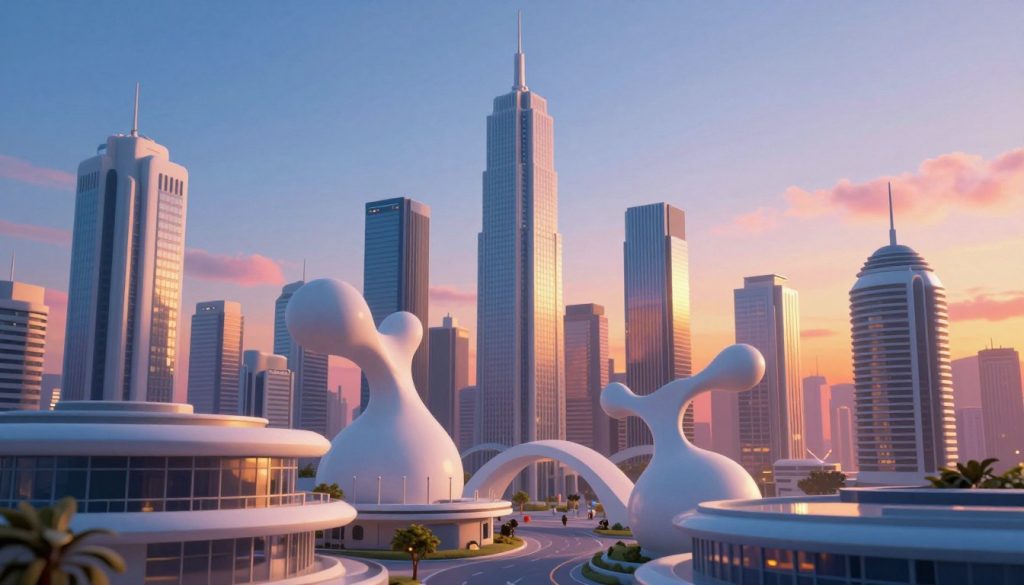
Exploring 3D aesthetics brings a depth that flat images can’t match. You can create characters that feel tangible and immersive in your digital world.
Modern AI tools, like DomoAI, have changed the game. They let you turn photos into moving clips, make videos look like anime, or create talking avatars easily.
Understanding Depth and Volumetric Lighting
The secret to a high-quality 3D look is how light interacts with your subject. Volumetric lighting makes light scatter through space, giving your characters a real presence.
Combining this with precise depth mapping makes your images feel three-dimensional. Shadows fall naturally, showing off the character’s shape.
Utilizing 3D Assets for Consistent Character Models
Keeping your character’s identity consistent is a big challenge. Using the same 3D assets ensures your character looks the same in all poses and places.
This method uses a stable base model as a reference. Better results come from standardizing your base mesh, using consistent texture maps, and applying uniform lighting presets.
- Standardize your base mesh to keep proportions identical.
- Use consistent texture maps to maintain skin and clothing details.
- Apply uniform lighting presets to ensure the character fits into any scene.
Why 3D Styles Offer Better Control Over Posing
3D-style workflows give you detailed control. Unlike flat 2D methods, 3D models let you move joints and limbs with mathematical precision.
This control is key for dynamic scenes where characters move. The AI can create poses that are anatomically correct and visually appealing.
Conducting a Comprehensive AI Nude Style Comparison
Doing a detailed ai nude style comparison is key. It balances your artistic vision with the model’s technical abilities. By looking at how different models handle data, you find the best fit for your project. This way, you avoid using models that don’t meet your quality needs.
Evaluating Visual Fidelity Across Different Models
Visual fidelity is about how well an AI image matches what you want. It could be photorealistic, anime-style, or 3D. Some models are great at showing intricate skin textures, while others focus on sharp lines for illustrations. Try different models to see which one works best for your subject.
Comparing Processing Times and Hardware Demands
Creating high-quality images takes a lot of computer power. This can slow down your work. If you have limited hardware, you need to find a balance between image quality and how fast it renders. Efficient models help you work faster, which is crucial when trying out different ideas or settings.
| Model Type | Visual Quality | Hardware Needs | Processing Speed |
|---|---|---|---|
| Photorealistic | High | High VRAM | Slow |
| Anime/Manga | Medium | Low | Fast |
| 3D Rendered | High | Medium | Moderate |
Assessing Ease of Use for Beginners
For beginners, easy-to-use platforms are crucial. Tensor Art AI is great because it does both image generation and hosting. This makes it perfect for hobbyists who want to try new things without dealing with complicated software.
Your choice should match your skill level and project goals. Spending time on an ai nude style comparison saves you a lot of effort later. Picking the right tool keeps your creative work both productive and fun.
Step-by-Step Guide to Selecting Your Style
Choosing the right visual style for your AI project is easier than you think. By following a structured workflow, you can explore the many ai nude styles out there. This method ensures your final product matches your creative vision perfectly.
Step One: Define Your Project Objectives
First, figure out what you want to achieve. Do you want hyper-realistic photos, stylized anime, or clean 3D models? Defining your goals early saves time and helps you choose the right tools.
- Identify the intended platform for your final images.
- Determine if the project requires a consistent character look.
- Establish whether you prioritize speed or maximum visual fidelity.
Step Two: Analyze Your Source Material
Your source material is key to your ai nude styles. Low-resolution or stylized images might not work well. Check the quality, lighting, and composition of your files to match your aesthetic.
High-quality source data usually leads to better results. If your material is limited, you might need to upscale or reduce noise. This step is crucial for maintaining consistency in your project.
Step Three: Test Models with Consistent Prompts
To make informed decisions, test models with the same prompts. This lets you see how each model handles different aspects. You can compare skin textures, lighting, and body proportions.
Keep a log of your results to see which models work best. By using the same prompts, you can clearly see each model’s strengths. This disciplined testing process is key to achieving top-notch results.
Optimizing Prompts for Specific AI DeepNude Looks
Creating precise prompts is key to bringing your vision to life. By using the right words, you can control the AI DeepNude looks you want. It’s about choosing the right terms to guide the model to your desired look.
Keywords That Trigger Realistic Textures
To get high-quality results, focus on words that describe surface details. Use terms like subsurface scattering, skin pores, and dermal texture for realistic skin. Adding 8k resolution or photorealistic skin ensures the image looks sharp and real.
Modifiers for Anime and Illustrative Styles
For stylized art, your words need to change. Use cel-shaded, clean line art, and flat color blocks for a cartoon look. For a modern twist, add vibrant color palette or painterly edge highlights to make your characters stand out.
Technical Parameters for 3D Rendering Effects
For 3D scenes, your prompt needs specific tech terms. Include volumetric god rays, ray-traced shadows, and depth of field for better light and space. For example, “JRPG rogue archer, leather straps, emerald cloak, stylized foliage, volumetric god rays, painterly edge highlights” shows how these elements work together.
| Style Category | Primary Modifier | Lighting Effect | Texture Focus |
|---|---|---|---|
| Realistic | Photorealistic | Soft Global Illumination | High-Res Skin Pores |
| Anime | Cel-Shaded | Hard Edge Shadows | Smooth Vector Lines |
| 3D Render | Ray-Traced | Volumetric God Rays | Reflective Surfaces |
By trying out these specific terms, you can fine-tune your AI DeepNude looks for any project. Regular testing will help you get better and more consistent results in your work.
Hardware and Software Considerations for Each Style
Building a top-notch AI studio needs a mix of local hardware and cloud power. Your creative work depends on the tech you pick. Whether you’re into anime or super-realistic art, your system needs will change a lot.
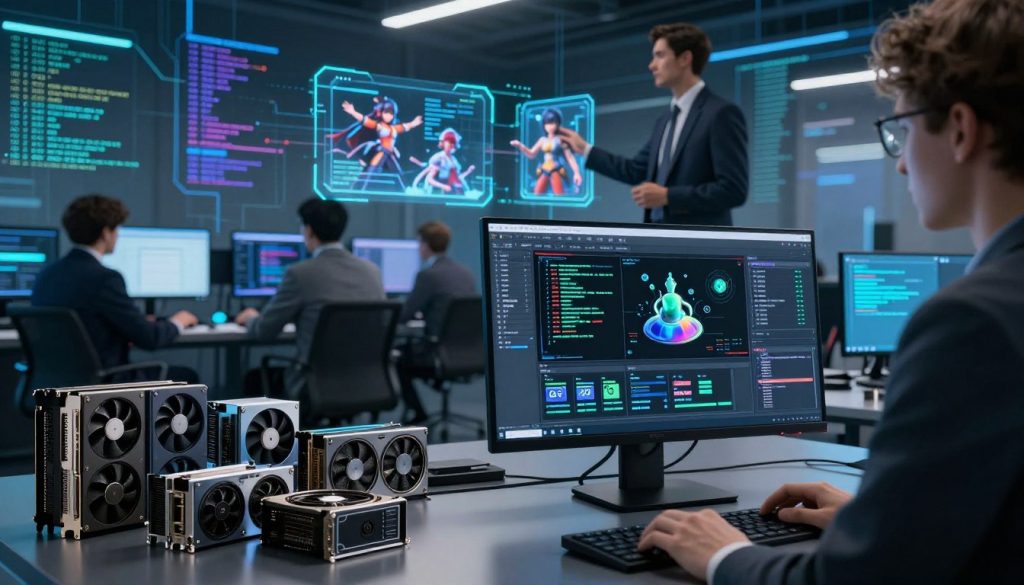
GPU VRAM Requirements for High-End Realism
For top-notch realism, you need lots of GPU VRAM. This is because complex textures and lighting need a lot of power. If your VRAM is too low, you might face slowdowns or crashes.
“The quality of your digital output is only as good as the hardware that renders it; invest in your GPU to unlock the true potential of your creative vision.”
For the best realism, aim for 12GB to 16GB of VRAM. This lets you work on high-res projects without losing quality. Consistency in your setup keeps your work stable during long sessions.
Software Environments for Anime and 3D Workflows
Stylized anime or 3D art needs special software. Most use Automatic1111 or ComfyUI to tweak their models. These tools help keep your art looking consistent.
For 3D art, mixing AI with Blender is common. This combo lets you add AI textures to 3D models. Keeping your software organized helps your workflow stay smooth.
Managing Local vs Cloud-Based Generation
Choosing between local or cloud generation depends on your budget and skills. Local work gives you total control but costs a lot upfront. Cloud services offer power on demand without the expense.
| Feature | Local Generation | Cloud Generation |
|---|---|---|
| Initial Cost | High | Low |
| Privacy | Maximum | Platform Dependent |
| Scalability | Limited by Hardware | Highly Scalable |
| Performance | Consistent | Variable |
If you work with big files or high-res models often, a local setup might save money. But for occasional projects, cloud services are flexible. Pick what fits your needs and budget.
Refining Your Results Through Post-Processing
Turning raw AI outputs into stunning works of art is a delicate process. Modern models do a great job, but the real magic happens in post-processing. Attention to detail here makes all the difference, elevating your project to professional levels.
For video creators, tools like Domo’s AI Image Upscaler are invaluable. They help blend static images into smooth, high-quality videos. This ensures every frame looks perfect.
Enhancing Realistic Skin Details in Photoshop
AI portraits can sometimes look too smooth or unnatural. To fix this, use frequency separation in Photoshop. This technique separates skin tones from finer details like pores and blemishes. By layering these, you keep the skin natural while enhancing overall clarity.
“The difference between a good image and a great one is often found in the subtle adjustments made after the initial render.”
Smoothing Anime Lines and Color Grading
Anime illustrations need a clean, sharp look. Focus on smoothing out any rough edges or pixels from upscaling. Also, use color grading to make sure the colors work well together. This ensures your highlights and shadows are consistent.
Adjusting 3D Lighting and Shadows Post-Generation
3D models need extra work to look realistic. Adjusting contrast and adding ambient occlusion layers can help. These steps make your models feel more real and immersive.
Common Challenges and How to Overcome Them
Even the most advanced AI algorithms sometimes need a human touch. These tools create unique artwork based on your input. But, they can have technical glitches. Human oversight is key to ensuring your final output is top-notch.
Fixing Artifacts in Realistic Generations
Realistic portraits can have unwanted noise or blurry features. Use in-painting tools to fix specific areas. Adjusting the denoising strength can also help clear up textures.
If facial features look off, try a face-restoration model. These algorithms sharpen facial details while keeping skin natural. Consistency is crucial when making these fixes to keep the image cohesive.
Correcting Anatomical Inconsistencies in Anime
Anime styles often face issues with limb placement or eye alignment. Manual editing in software like Photoshop can quickly fix these problems. The liquify tool can help adjust lines for a more natural look.
For ongoing issues, refine your prompt to include specific anatomical constraints. Refining your prompt with negative keywords can also help avoid common errors. Always check the character’s proportions against artistic references to keep the style authentic.
Solving Texture Mapping Issues in 3D Models
Texture stretching or misaligned UV maps can occur in 3D-rendered styles. These errors often happen when the AI struggles to understand depth. Re-projecting textures or manually painting seams in 3D software can fix these issues.
“The true power of artificial intelligence lies not in replacing the artist, but in providing a canvas that requires the artist’s unique vision to perfect.”
Volumetric lighting can also hide minor mapping flaws if adjusted correctly. Strategic lighting draws the viewer’s eye to the model’s focal point. By mastering these adjustments, your 3D assets will remain high-quality and visually appealing.
| Issue Type | Primary Cause | Recommended Fix |
|---|---|---|
| Realistic Noise | Low sampling rate | Increase denoising steps |
| Anime Anatomy | Complex pose logic | Manual liquify editing |
| 3D Mapping | UV projection error | Re-map texture coordinates |
| Blurry Details | Upscaling artifacts | Use AI-based sharpening |
Ethical Considerations and Responsible Usage
Your journey with AI tools should always be guided by responsibility. As you explore generative models, remember your output impacts the digital world. Maintaining high ethical standards ensures your work is professional and respectful.
Understanding Platform Terms of Service
Every AI platform has its own legal rules for use. Before starting, read the terms of service carefully. These documents explain your rights and what you can and can’t do with the software.
Ignoring these rules can cause problems like account suspension or legal issues. When sharing your models or artworks, be aware of these risks:
- Content Ownership: Check if the platform owns the images you create.
- Misuse Policies: Know what you can’t do to avoid breaking rules.
- Distribution Rights: See if you can sell or host your assets elsewhere.
Respecting Privacy and Consent Standards
Creating realistic images of people comes with big responsibilities. Never make images of real people without their okay. Keeping others’ privacy is key to ethical AI.
When using datasets or training models, handle the data carefully. If unsure about the data’s origin, it’s safer to avoid it. Here are some tips for staying ethical:
“The power of AI should be balanced by a commitment to human dignity and the protection of individual privacy rights.”
By focusing on transparency and consent, you avoid misuse risks. Always treat the subjects of your AI-generated content with respect. This not only keeps your work safe but also helps the whole creative community.
Conclusion
Choosing the right AI style is a careful balance. It depends on your skills, artistic goals, and ethics. Now, you know how to navigate these complex visual worlds.
Knowing the needs of realistic, anime, and 3D styles helps. You can use tools like Stable Diffusion or Midjourney to improve your work. This guide shows how to turn ideas into beautiful digital art.
Testing and refining your work is key to quality. Try different prompts and settings to find what suits your vision best.
Your journey with AI-generated images is a continuous learning path. Stay updated with new tech to keep improving. Share your work and explore new possibilities.
FAQ
How do the various ai nude styles differ in their visual impact?
The look of AI nude styles varies based on your choice. Photorealism focuses on detailed skin and lighting, like high-end photos. Anime styles use clean lines and bright colors, fitting into genres like shōnen or shojo.
3D styles add depth, making characters seem more real than flat pictures.
What is the best way to conduct a deepnude comparison between different models?
To compare deepnude models well, look at their accuracy, speed, and hardware needs. Try the same prompt on different platforms like Stable Diffusion or Midjourney. This shows how each handles details and style.
This helps find the best tool for your project and skills.
How can I achieve high-fidelity skin textures in realistic AI DeepNude looks?
For realistic AI DeepNude, focus on prompt engineering and high-resolution upscaling. Use specific modifiers for skin details and lighting. Adobe Photoshop helps keep the look sharp for big screens.
Make sure your GPU has enough VRAM for clear images.
What specific tags should I use for high-quality anime and manga styles?
For anime, use tags like shōnen, shojo, or chibi. Add keywords for cel-shading, vibrant colors, and clean lines. This keeps the character’s look right and charming.
Why is 3D rendering preferred for complex character posing?
3D rendering is better for complex poses because it uses consistent 3D assets. This keeps the character’s look the same in different poses. Unlike 2D, 3D uses lighting and depth for dynamic visuals.
What are the hardware requirements for generating realistic AI images?
Realistic AI images need a strong NVIDIA GPU and lots of VRAM. Cloud services are easy to use, but local work gives more control. Make sure your hardware can handle the needed processing for clear images.
How do I fix common artifacts and anatomical inconsistencies in AI-generated art?
AI can sometimes get features wrong or texture mapping off. Use Adobe Photoshop for manual fixes or make your prompts clearer. This ensures your art looks professional.
What ethical guidelines should I follow when using these AI tools?
Always follow privacy and consent rules. Respect the terms of service and get permission for images of real people. Being professional and respectful is key for ethical AI use and protecting rights.